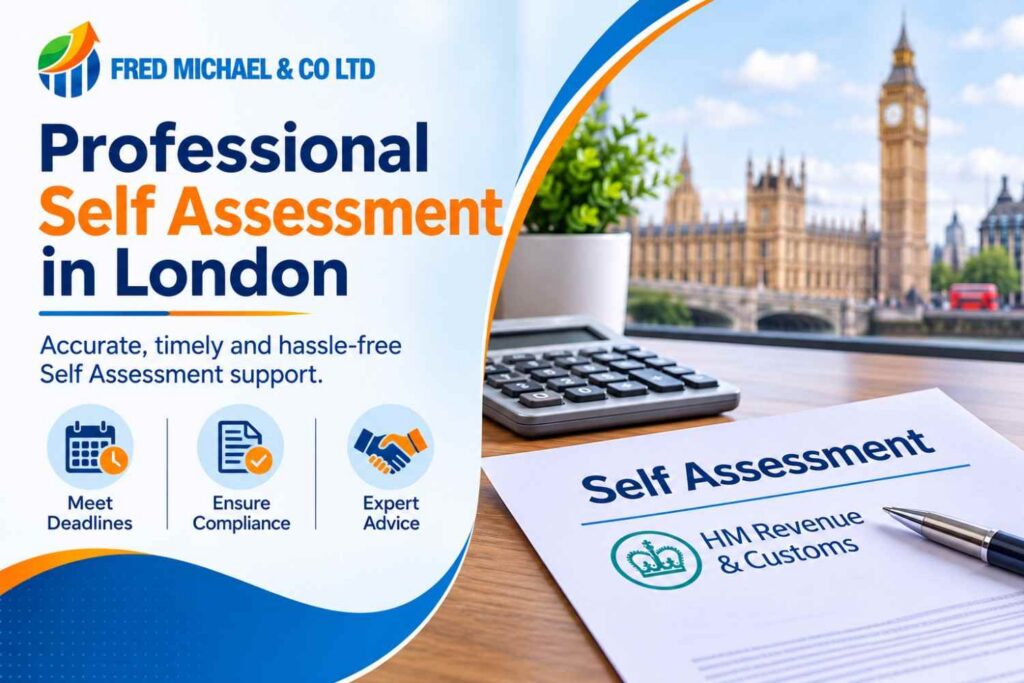
Every January, thousands of Londoners file a Self Assessment tax return and assume the figure at the bottom is final. In reality, the return is your best chance to claim back tax you have overpaid. Many people leave money with HMRC simply because they miss a relief or enter a figure in the wrong box, and an online self assessment tax return makes it easy to file quickly without noticing what was left out.
Getting the numbers right takes organisation and knowledge of the rules. Reliable accounting and bookkeeping services keep your income and expenses in order all year, while experienced tax return accountants in London turn those records into a return that claims everything you are entitled to. Good accountants in London also spot reliefs that most people never think about.
What Is Self Assessment?
Self Assessment is the system HMRC uses to collect tax on income that is not taxed at source. Unlike employees who pay through PAYE, you report your income and gains yourself, and HMRC calculates what you owe or what it owes you. Personal tax return services help individuals with this reporting. You usually need to file a return if you:
- Are self-employed and earned more than £1,000 in trading income
- Receive rental income above the property allowance
- Are a company director with income outside PAYE
- Have taxable capital gains, such as from selling shares or a second property
- Earn untaxed savings, dividend or foreign income above certain limits
- Receive the High Income Child Benefit Charge
The tax year runs from 6 April to 5 April, and online returns are due by 31 January after it ends. Because the deadline also brings a large tax payment, cash flow management and forecasting in London helps you set money aside throughout the year, and good tax return services in London will remind you well in advance. Business owners with growing income may even bring in a virtual finance director to plan the year ahead.
Why Do Some People Get a Refund?
A refund happens when you have paid more tax than your return says you owe. In London, where incomes and costs are high, this is more common than people think, and tax return assistance in London often begins with finding these gaps. Typical reasons include:
- Payments on account that were too high: if your profits fall, advance payments may exceed your real bill.
- Unclaimed business expenses: forgotten costs reduce your taxable profit.
- Pension contributions: relief at higher rates is often claimed through the return.
- Tax already deducted: for example, under the Construction Industry Scheme.
- Charitable giving: Gift Aid can extend your basic rate band.
- Marriage Allowance and other reliefs that were never claimed.
The key point is that HMRC will not search for these claims for you. A self assessment tax return service in London can check every box, Tax Planning services in London can time pension and purchase decisions, and accounting and bookkeeping services make sure the evidence is ready if HMRC asks.
Business Expenses You Should Not Miss
For the self-employed, expenses are the most reliable way to lower tax and create a refund. Many owners outsource tax preparation services in London so that every cost is coded correctly, working with accountants in london who know which items HMRC accepts, and with an accounting service London firms rely on for year-end figures. HMRC allows costs incurred wholly and exclusively for business, such as:
- Office rent, co-working fees and business rates
- Software subscriptions, website costs and domain names
- Professional fees, insurance and bank charges
- Marketing and advertising
- Business travel, including mileage at HMRC’s approved rates
- Equipment such as laptops, tools and phones
- A proportion of home costs if you work from home
If your income is small, the £1,000 trading allowance can be used instead of actual expenses. Choose whichever gives the better result. Outsourced accounting services can compare both options, and accounting services for small business often include a cash flow management and forecasting in London review so you know what a refund means for your bank balance.
Pensions and Donations
Personal pension contributions are one of the most overlooked refund routes. Higher and additional rate taxpayers can claim extra relief through their return, which can be worth hundreds of pounds a year to someone in London paying 40 per cent tax. Gift Aid works in a similar way, so keep a record of every donation. Tax advice for individuals London residents receive should cover both, and Tax planning services in London can show how to time contributions before 5 April.
Property Income and Capital Allowances
London landlords often have a complicated tax position. Rental income is taxable, but allowable costs such as agent fees, repairs and insurance can be deducted, while mortgage interest is dealt with through a tax reduction. Experienced tax return accountants in London will handle this carefully, tax return services in London can report each property correctly, and a virtual finance director can help portfolio owners plan growth and borrowing.
Capital allowances can speed up relief on equipment and tools, and timing a purchase well can turn an expected bill into a refund. A self assessment tax return service in London will include each claim in the right year, Tax Planning services in London can show whether to buy before or after year end, and many owners outsource tax preparation services in London so nothing is missed. A small business tax accountant in London can also advise on larger purchases.
Payments on Account Explained
Payments on account are advance payments towards next year’s tax bill. If your bill is over £1,000, HMRC usually asks for two payments, each half of the previous year’s liability, due on 31 January and 31 July.
They cause confusion because the first payment falls at the same time as the balancing payment. If your income has dropped, you can apply to reduce them, which protects cash flow. If you have already overpaid, the surplus can be refunded or carried forward.
Deadlines and Penalties to Avoid
Missing a deadline cancels out much of the benefit of a refund. The main dates are:
- 5 October: register for Self Assessment if you are new
- 31 October: paper return deadline
- 31 January: online filing deadline and payment of tax owed
- 31 July: second payment on account
A late return carries an immediate £100 penalty, with further penalties building up, and interest is charged on late payment. Early Self assessment tax filing in London also means any refund arrives sooner, and tax filing assistance in London can keep you on track.
How Long Does a Refund Take?
Once your return is submitted and HMRC confirms an overpayment, refunds are normally paid to your bank account within a few weeks. Delays happen when HMRC needs to check details, so make sure your bank details, address and Unique Taxpayer Reference are correct. London income tax return services can check these before you file.
If you overpaid in an earlier year, some overpayment relief claims can go back four years after the end of the tax year. A Self assessment tax specialist can tell you which route applies.
The Benefits of Professional Self Assessment Support
You can file a return yourself, but the rules are detailed and mistakes carry real penalties. Self assessment tax return services in London from a qualified adviser bring several advantages:
- Accuracy: a Self assessment tax accountant in London checks figures against your records, reducing errors and enquiries.
- Maximum claims: a Tax return accountant London taxpayers trust identifies reliefs you did not know about.
- Time saved: Expert tax preparation services replace hours of forms and portals.
- Better planning: a Self assessment tax advisor in London or a Tax consultant in London guides pension timing and purchases.
- Peace of mind: Professional tax return services in London track deadlines and handle HMRC letters.
Records You Should Keep
HMRC expects you to keep records for at least five years after the 31 January submission deadline. Scan receipts as you receive them. Useful documents include:
- Sales invoices and bank statements
- Receipts for business costs
- Mileage logs and home working calculations
- Pension and Gift Aid statements
- P60s, P45s and CIS deduction statements
- Rental statements and landlord insurance documents
Common Mistakes That Reduce Your Refund
- Forgetting to claim allowable expenses
- Entering income in the wrong box
- Not claiming pension or Gift Aid relief
- Ignoring tax already deducted at source
- Missing the deadline and paying avoidable penalties
- Failing to reduce payments on account when profits fall
Each of these can turn a refund into a bill, or shrink a refund you were entitled to receive.
Final Thoughts
Self Assessment does not have to be stressful, and it should not leave you out of pocket. With a clear understanding of allowable expenses, pension relief, Gift Aid, payments on account and the key deadlines, many Londoners can reduce their tax bill or claim back money they did not know was owed.
If you want your Self Assessment handled properly and your refund maximised, Fred Michael & Co Ltd is here to help. We support sole traders, landlords, freelancers and company directors across London with accurate returns, practical planning and friendly, jargon-free advice. Contact Fred Michael & Co Ltd today to book a free consultation and find out how much you could claim back.