
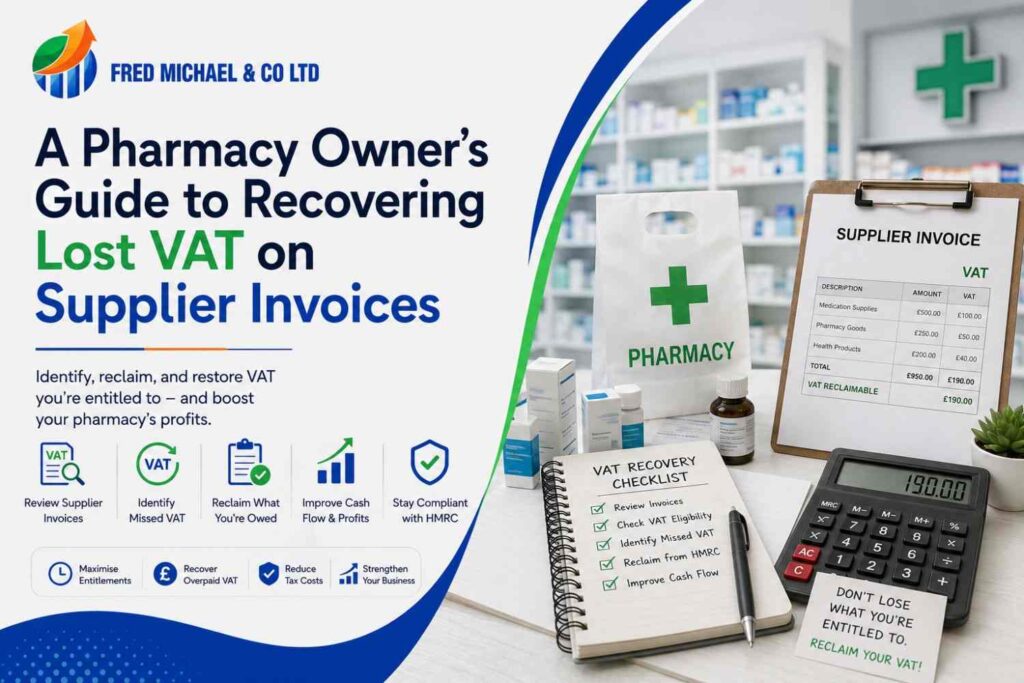
Running a pharmacy on a just-in-time ordering model means goods arrive constantly from multiple wholesalers and manufacturers. Each delivery brings a delivery note, and it’s easy to assume that’s all you need. In reality, most suppliers have moved VAT invoices online, and without a deliberate retrieval process, a meaningful chunk of your reclaimable VAT can quietly go uncollected for years, unnoticed until a proper VAT recovery for pharmacies review is carried out.
Whether you manage bookkeeping internally or partner with an accounting service in London, this guide walks through why this happens, what unclaimed VAT on supplier invoices is likely costing your pharmacy, and the practical steps to close the gap and recover money you’re already owed.
Delivery Notes Are Not VAT Invoices
This is the single most important distinction to understand, and it’s the root cause of most unclaimed VAT in pharmacy settings, one frequently highlighted by tax return accountants in London. A delivery note confirms goods have arrived, what and how much, and often when. It doesn’t meet HMRC’s requirements for VAT recovery, which is where a proper Pharmacy VAT reclaim process becomes essential.
To reclaim input tax, you need a valid VAT invoice with the supplier’s VAT registration number, the tax point, a breakdown of VAT charged, and the other statutory elements. A delivery note doesn’t contain this, and treating it as one is a common source of lost VAT invoices pharmacy teams rarely spot in time.
Many pharmacies, without realising it, submit VAT returns based on an incomplete set of invoices. Delivery notes get filed and matched to stock as if the paperwork trail is complete. Meanwhile, the actual VAT invoice sits untouched entirely, highlighting exactly why a clear VAT invoice retrieval process matters.
The Shift to Online Invoicing
The pharmaceutical supply chain has moved almost entirely away from paper invoices attached to deliveries. Today, most suppliers issue VAT invoices through one of three channels, each affecting Pharmacy input tax recovery differently:
- Online supplier portals, requiring active login and download
- Automated email systems, sending invoices to an inbox that may not be checked regularly
- EDI (Electronic Data Interchange) platforms, transmitting invoice data directly between systems
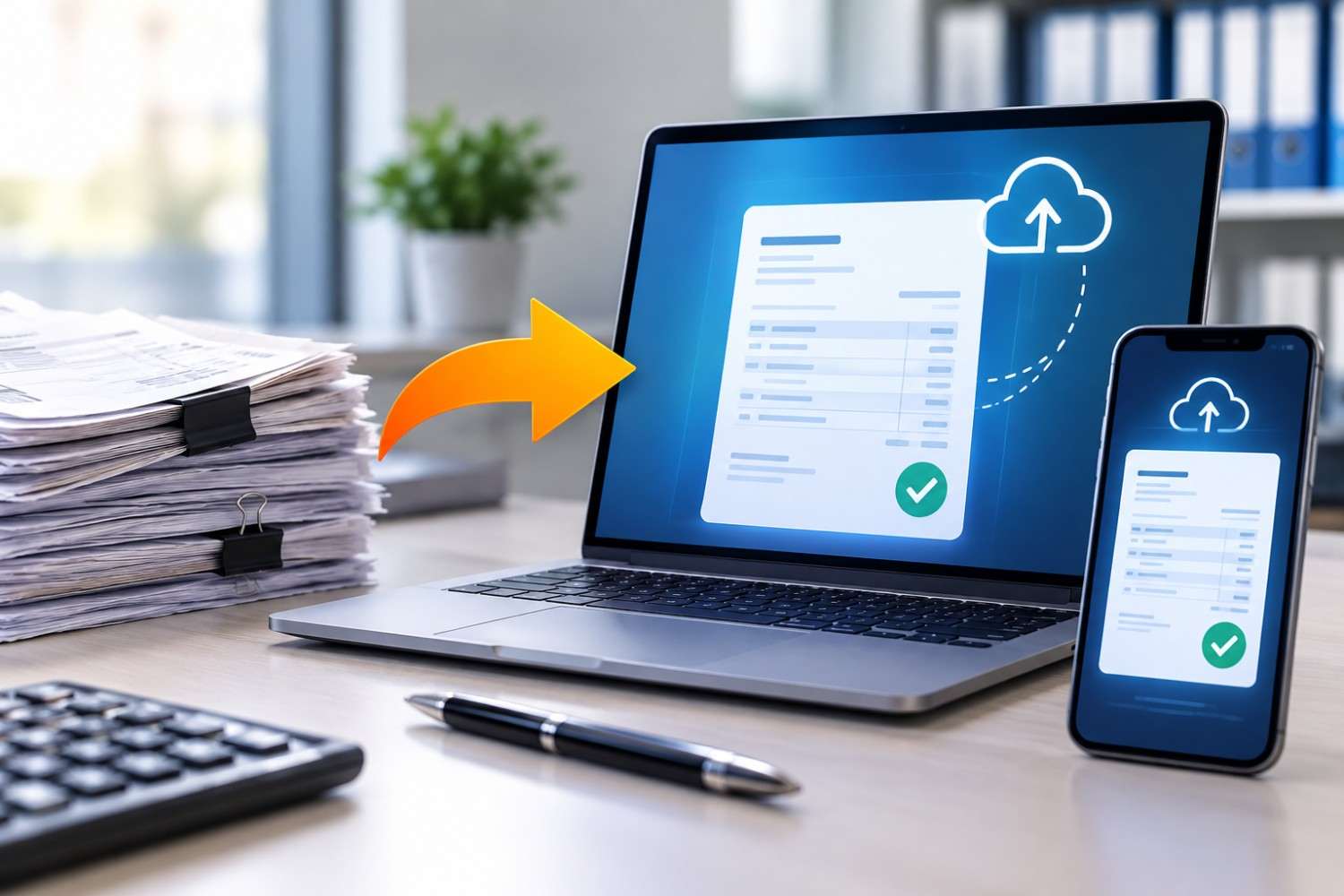
This shift makes sense from a supplier’s perspective, faster, cheaper, easier to reconcile at scale. But it creates a gap on the receiving end, one a Virtual Finance Director in London would typically flag during routine oversight. Staff handling deliveries often assume the delivery note is the invoice, since it looks official and arrives with the goods. The genuine VAT-claimable document remains sitting in a portal or inbox, uncollected and invisible to bookkeeping, a key reason Recovering VAT on pharmacy purchases takes more than a glance at the paperwork.
Without someone responsible for logging into each supplier’s portal, checking the invoice inbox, or reconciling EDI data against what’s been claimed, these documents accumulate unnoticed. Over years, this adds up to a significant, avoidable loss, one of the most common VAT return errors an outside review tends to uncover.
The Financial Impact
The scale of this issue becomes clear once you look at typical numbers, which is exactly why tax return accountants in London are increasingly asked to review pharmacy invoice files. A pharmacy operating on a just-in-time model will typically receive £15,000 to £20,000 in VAT refunds each month when invoice retrieval is working properly.
Where retrieval is weak, and this is more common than most owners realise, £5,000 to £10,000 per month may go unclaimed, a substantial proportion of the VAT a pharmacy is legitimately entitled to recover, and the kind of gap a specialist accounting service in London will typically flag within the first review.
Extrapolated over time, the numbers become difficult to ignore, a pattern business financial advisors in London see repeatedly across the pharmacy sector:
- £60,000 to £120,000 lost annually
- £300,000 to £600,000 lost over five years
These aren’t theoretical figures. Recent reviews for pharmacy clients have resulted in thousands of pounds being recovered, money legitimately owed but never claimed simply because the underlying invoices were never retrieved. In some cases, a single review of the past two to three years has uncovered enough unclaimed VAT to fund a meaningful investment elsewhere, exactly the sort of finding a Virtual Finance Director in London would build into ongoing financial oversight.

Why This Goes Unnoticed
If the amounts involved are this significant, a reasonable question is why more pharmacy owners haven’t caught this already. The answer lies largely in how pharmacy finances are structured day to day, a gap that proper financial planning management in London can help close before it compounds further.
Pharmacies typically receive large, regular NHS payments each month, arriving reliably and creating a strong sense of financial stability. Against that backdrop, a gap of a few thousand pounds in VAT recovery doesn’t stand out or trigger a red flag, it simply blends into the noise of a business that appears to be performing well, which is precisely where business financial advisors in London add value by looking beyond the headline figures.
Underneath that stability, back-office processes can be quietly inefficient. Missing invoices, unmatched delivery notes, and non-compliant suppliers can all persist for years without detection. Nobody loses sleep over it because nothing appears broken, deliveries are arriving and NHS payments are landing on schedule. The unclaimed VAT never surfaces as a problem because there’s no process looking for it, and it’s rarely something an annual accounts review catches either, since the gap sits at the level a small business financial advisor in London would typically be asked to review.
Read More: Tax Planning for Pharmacies, Chemists & Veterinary Clinics in London
Recommended Actions
The good news is that this is a fixable problem, and fixing it doesn’t require a wholesale change to how your pharmacy operates. It requires a structured, deliberate approach, ideally guided by a chartered financial advisor in London who understands both pharmacy operations and VAT rules. Here’s where to start.
A. Confirm How Each Supplier Issues Invoices
Start with a straightforward audit of your supplier list. For each one, find out directly whether invoices are sent via portal, email, or EDI. Don’t assume, ask explicitly for every supplier you order from regularly. This single step often reveals how many separate systems need checking, exactly the kind of groundwork pharmacy accountants in London start with.
B. Implement an Invoice Retrieval and Matching System
Once you know where each invoice actually lives, build a process around retrieving it consistently. This means:
- Scheduling regular downloads from each supplier portal, rather than relying on someone remembering
- Matching delivery notes against the corresponding VAT invoice for every order
- Running exception reporting to catch cases where a note exists but no matching invoice has been retrieved
This doesn’t need to be complex. A simple checklist and a designated person, checked weekly, closes most of the gap, something a chartered financial advisor in London can help set up in a single session, and it’s often the core of the VAT recovery services in London offered as part of a wider review.
C. Train Staff
The distinction between a delivery note and a VAT invoice needs to be understood by everyone who touches deliveries or bookkeeping, not just whoever prepares the return. If staff file delivery notes as complete documentation, the gap will keep recurring no matter how good your system is on paper. A short briefing on what to look for goes a long way, something Pharmacy VAT specialists in London often help build into staff onboarding.
D. Review Historical Periods
Don’t assume the problem starts today. If retrieval has been weak, significant VAT is likely recoverable from previous periods, within HMRC’s time limits for correcting past returns. A historical review is often where the largest recoveries are found, surfacing months or years of accumulated unclaimed VAT in a single exercise, one of the most valuable services London pharmacy accounting services can offer a business that hasn’t reviewed this before.
Read More: Specialist Pharmacy Accounting Services to Maximise Profits & Stay Compliant
Advisory
If your pharmacy has not formally reviewed how supplier invoices are issued, retrieved, and matched against deliveries, there’s a real possibility you’re losing substantial VAT every month without realising it. Given the scale involved, potentially tens of thousands of pounds a year, this isn’t a minor detail to address eventually. It’s worth prioritising, and it’s a common starting point for pharmacies that later bring in tax return accountants in London to formalise the process.
A structured system review is strongly recommended, one that checks how every supplier issues invoices, confirms your current process is catching everything, and looks back over recent history for anything already missed. For a business receiving thousands of deliveries a month, getting this right means recovering money you’re already owed. Many pharmacy owners bring in VAT reclaim accountants in London alongside existing bookkeeping, or work with independent pharmacy accountants in London who specialise in this niche. Whichever route you take, guidance from experienced Pharmacy tax advisors in London, supported by a small business financial advisor in London and an ongoing accounting service in London for day-to-day oversight, is one of the most reliable ways to stop losing VAT you’re entitled to reclaim, with financial planning management in London keeping the process consistent going forward.
Final Thoughts
Unclaimed VAT rarely announces itself, it hides quietly behind steady NHS payments and a paperwork trail that looks complete on the surface. For a pharmacy processing thousands of deliveries a month, even a small retrieval gap adds up to real money left on the table year after year. Closing it doesn’t require a complete overhaul, just a proper system for tracking down every supplier invoice that’s actually owed to you.
That’s exactly where Fred Michael & Co Ltd can help. Our team specialises in pharmacy accounting and VAT recovery, and we’ll review your invoice-handling process, identify what’s been missed, and help you reclaim it. Get in touch with Fred Michael & Co Ltd today for a free VAT review.