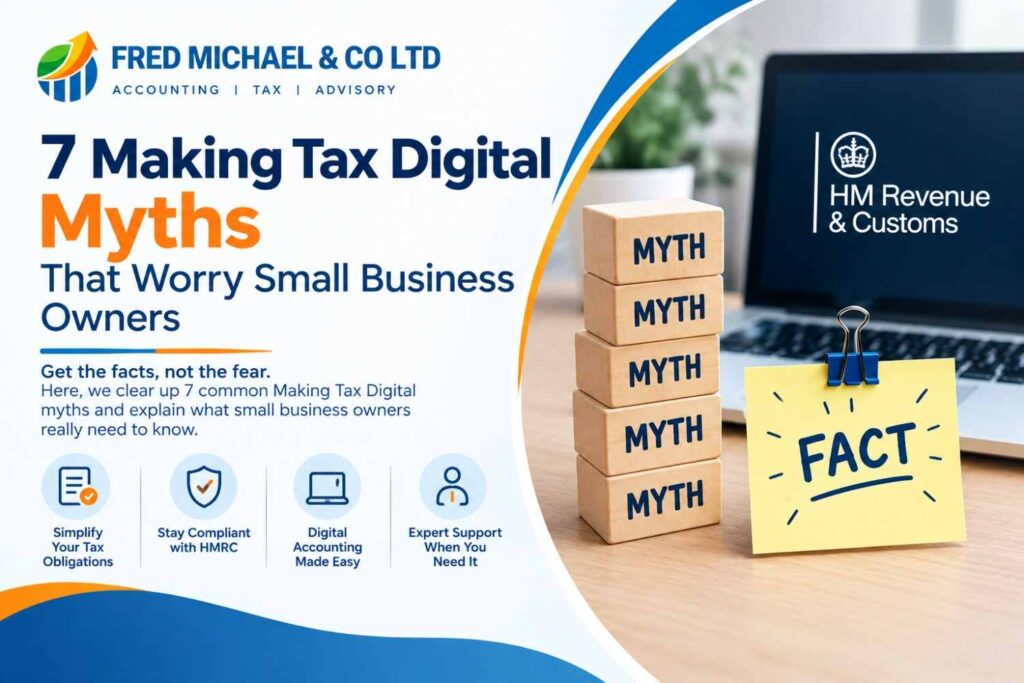
Making Tax Digital (MTD) is changing how businesses and individuals manage tax records and report information to HM Revenue and Customs (HMRC). As the UK tax system becomes more digital, Making Tax Digital concerns for small businesses usually centre on software, deadlines, costs and responsibilities.
Although digital reporting can make financial administration more organised, uncertainty about the rules often causes unnecessary worry. Some owners think they must replace all their existing systems, while others believe digital reporting will automatically raise their tax bills. Whether you manage your own books or use accounting services for small business, knowing the facts makes preparation much easier.
Understanding the facts helps businesses prepare with confidence. This article explores seven Making Tax Digital myths, explains what the rules mean in practice and outlines the steps owners can take. Support from tax return accountants in London or Bookkeeping and Accounting Services can also make the transition smoother.
What Is Making Tax Digital?
Making Tax Digital is an HMRC initiative to modernise tax administration through digital record-keeping and electronic reporting. Making Tax Digital requirements vary by tax type, the taxpayer’s circumstances and the implementation timetable.
For eligible self-employed individuals and landlords, MTD for Income Tax means keeping digital records and submitting updates through compatible software. It also changes how Making Tax Digital and self assessment fit together, because a final declaration replaces the traditional return, and a self assessment tax return service in London can help you handle both. VAT-registered businesses may already have obligations under MTD for VAT.
Knowing which requirements apply to you is the first step towards preparing effectively.
Myth 1: Making Tax Digital Applies to Every Business Immediately
One of the most Common Making Tax Digital misconceptions is that every UK business must join at the same time, a question accountants in London hear every week. In reality, the requirements depend on the tax regime, eligibility criteria, income thresholds and implementation dates.
MTD for VAT already applies to most VAT-registered businesses, subject to exemptions. Making Tax Digital for small businesses is arriving in stages for Income Tax. Sole traders and landlords with qualifying gross income above £50,000 must join from 6 April 2026, with the threshold falling to £30,000 from 6 April 2027 and £20,000 from 6 April 2028, subject to the applicable rules. Making Tax Digital for small business partnerships and Making Tax Digital for independent businesses outside these categories may follow different timetables, so check each case separately.
What small business owners should do: Check which requirements apply to you, review the relevant income threshold and confirm your start date using current HMRC guidance.
Myth 2: Making Tax Digital Means Paying More Tax
Some owners fear that digital reporting will increase their tax. In fact, the Making Tax Digital impact on small businesses is mainly administrative. It changes how records are kept and information is reported, not tax rates. The tax you pay still depends on taxable income, allowable expenses and reliefs.
Digital records can help you spot missing transactions and monitor income, but software cannot guarantee that every calculation is correct. Records must still be accurate, and expenses must meet the rules.
What small business owners should do: Keep complete records, retain invoices and receipts, and review your figures regularly. If you are unsure about allowable expenses, consider professional help such as Tax Planning services in London.
Myth 3: You Must Buy Expensive Accounting Software
Many people believe MTD requires costly accounting software. In practice, Making Tax Digital costs for small businesses vary, and the tools you need depend on how you keep records today. Some businesses use commercial packages, while others use simpler compatible tools or spreadsheets linked through bridging software.
However, ordinary spreadsheets alone may not meet the Making Tax Digital digital record requirements. Check that your software is compatible with HMRC’s services and supports record-keeping and submissions. Some owners prefer accounting and bookkeeping services that include compatible software, or outsourced accounting services that handle the technology for them.
What small business owners should do: Review your current system before buying anything, compare cost and features, and choose a solution that meets your obligations without adding complexity.

Myth 4: You Must Submit Your Tax Return Every Quarter
The term “quarterly updates” makes some owners believe they must complete a full tax return four times a year. They don’t. Eligible taxpayers send quarterly summaries of business income and expenses using compatible software. These updates are not final returns and don’t require a calculation of your annual tax liability. A final declaration at year end confirms your taxable income.
Making Tax Digital bookkeeping requirements make a steady routine worthwhile, and tax return services in London can help keep every stage on track.
What small business owners should do: Set a calendar for recording transactions, submitting quarterly updates and completing year-end tasks.
Read More: Autumn Budget 2026 Rumours vs Reality: Should You Change Anything Before 28 October?
Myth 5: Making Tax Digital Is Too Complicated for Small Businesses
Digital requirements can seem daunting after years of manual records, but suitable software and consistent routines make them manageable. Many systems offer transaction categorisation, bank reconciliation and electronic submissions, and the Making Tax Digital impact on bookkeeping is often positive, with less repeated admin.
Software is not automatic, though. Transactions must be checked and errors corrected before submission. Making Tax Digital implementation challenges usually come from poor records rather than the technology itself. Many owners hand the work to an accounting service in London, or outsource tax preparation services in London, so they can focus on running the business.
What small business owners should do: Learn the basics of your software, practise recording income and expenses, and ask for help if you need it.
Myth 6: Businesses That Use an Accountant Do Not Need to Worry About MTD
Working with an accountant eases administration but doesn’t remove your responsibilities. You must still keep records and meet the reporting steps. Making Tax Digital and tax accountants works best as a partnership: a professional can choose software, organise records and submit updates, but can’t fix incomplete records without the right information.
It is possible to manage Making Tax Digital without an accountant if your affairs are simple. Where you do have support, Bookkeeping and Accounting Services should spell out who handles software setup, quarterly submissions and deadlines. Accountants in London usually agree to this at the start of the engagement.
What small business owners should do: Discuss MTD with your accountant well before your start date and confirm who is responsible for each task.
Myth 7: There Is Nothing You Can Do If You Cannot Use Digital Systems
Some people worry they have no alternative if they struggle with computers or have limited internet access. Exemptions may be available in certain circumstances, such as age, disability, health, religious beliefs or lack of reliable internet access. Eligibility depends on your circumstances, so don’t assume an exemption applies without checking.
Making Tax Digital help for small businesses is available through HMRC guidance and professional advisers, and tax return accountants in London can help you with an exemption claim.
What small business owners should do: Review HMRC’s exemption guidance, contact HMRC or a qualified adviser, and keep supporting information ready.
Read More: Payroll Services for Your UK Business: A Comprehensive Guide
How Small Businesses Can Prepare for Making Tax Digital
Preparing for Making Tax Digital 2026 is a practical exercise, not a reason to worry. These steps help:
- Check your eligibility. Review your business structure, qualifying income and start date. Income Tax requirements differ from those already applying under VAT.
- Review your records. Identify how you record sales, purchases and expenses. If your books are messy, an accounting service in London can tidy them before you switch.
- Choose suitable software. Compare usability, cost and compatibility. Outsourced accounting services can manage this for you.
- Build a bookkeeping routine. Record transactions consistently and reconcile regularly. Accounting and bookkeeping services can take this over if time is short.
- Understand your deadlines. Add quarterly and year-end dates to your calendar. Tax return services in London can monitor them, and a self assessment tax return service in London can handle your return.
- Seek professional guidance. Making Tax Digital advice for small business owners can reduce errors and surprises, and Tax Planning services in London can show how your records feed into your tax position.
Final Thoughts: Make Making Tax Digital Easier to Manage
Making Tax Digital may change how some businesses maintain records and report tax, but many concerns come from misunderstandings. It does not automatically increase tax bills, require every business to join immediately or mean a full tax return every quarter. The best approach is to understand the rules that apply to you, prepare records in advance, choose suitable software and keep a consistent routine.
Fred Michael & Co Ltd supports businesses with bookkeeping, tax-related administration and financial record management, including accounting services for small business owners. If you’d rather not handle it alone, you can outsource tax preparation services in London to a team that understands the requirements.Get in touch with Fred Michael & Co Ltd to discuss your accounting and bookkeeping needs and prepare for Making Tax Digital with greater confidence.