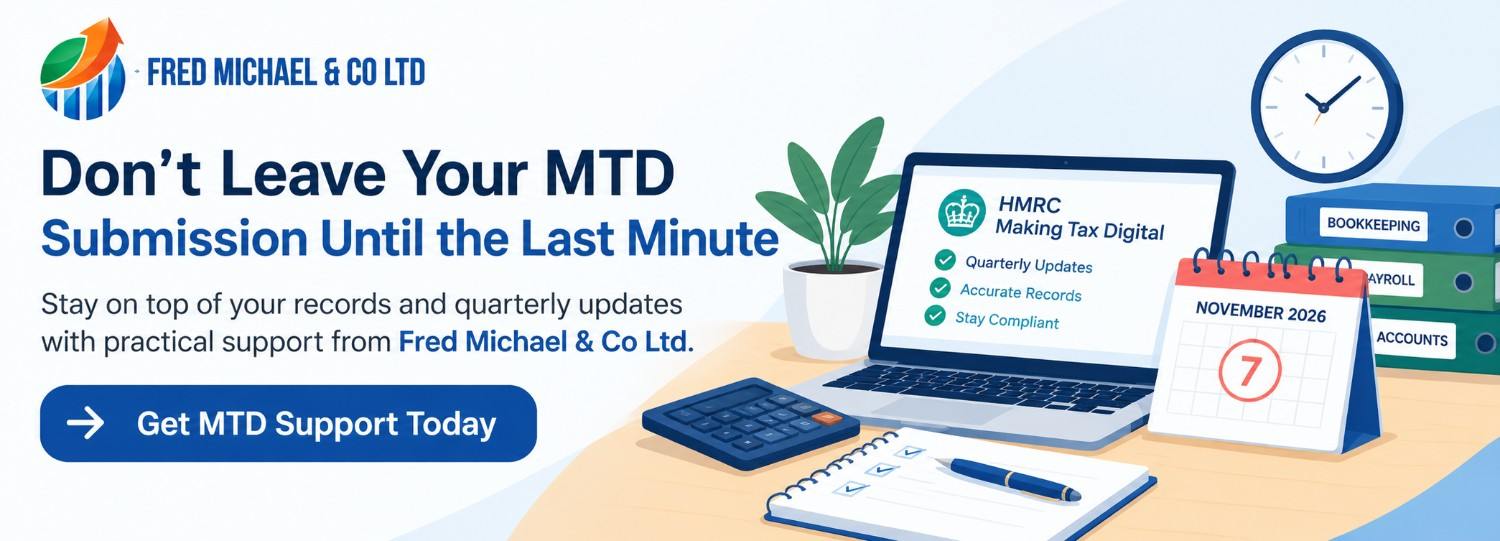

August’s first Making Tax Digital deadline caught a huge number of sole traders and landlords off guard, with roughly half of those mandated into the new system missing the cut-off entirely. Now the MTD November deadline is here: 7 November 2026. For many, this one carries a false sense of security, “I got through the first one, so this should be easier.” In some ways it is. In others, it hides a trap catching people who assume each quarter is judged in isolation.
Businesses that struggled the first time round are increasingly turning to a proper accounting service in London to get ahead of the second submission rather than repeating the same scramble. Working with an established accounting service in London early in the quarter, rather than days before the deadline, is often the difference between a calm submission and a rushed one. This article walks through what the Making Tax Digital second quarterly update covers, the mistakes most likely to trip people up, and a checklist to make sure you’re ready before the date arrives.
What the November 2026 Deadline Actually Covers
Under Making Tax Digital for Income Tax, sole traders and landlords with qualifying income above £50,000 must submit an MTD quarterly update deadline to HMRC using compatible software. The second of these, due 7 November 2026, might sound like it simply covers July, August, and September, but it doesn’t. Firms offering combined bookkeeping and accounting services report this misunderstanding is one of the most common reasons quarterly figures come in wrong, and it’s exactly the kind of gap good bookkeeping and accounting services are built to catch.
MTD quarterly updates are cumulative. The 7 November 2026 MTD deadline covers the entire period from 6 April 2026 to 5 October 2026 under standard update periods (or 1 April to 30 September for calendar quarters). It isn’t a fresh three-month snapshot; it’s a running year-to-date total folding in everything already reported in August, plus the additional three months since. Treat it as a standalone quarter and you risk under-reporting by a full quarter’s worth of income and expenses.
There’s a second quirk worth flagging: 7 November 2026 falls on a Saturday, with no working-day extension. Anyone planning to submit “on the day” should build in a buffer rather than leaving it to the deadline itself.
Who Needs to Act Before 7 November
The rules haven’t changed since August. If your gross qualifying income from self-employment and property exceeded £50,000 on your 2024/25 Self Assessment return, you were mandated into MTD from April 2026, and the November update applies to you exactly as August’s did. For anyone still below the threshold, a standard self assessment tax return service in London remains the right fit for now and staying with a self assessment tax return service that also understands MTD makes any future switch smoother while those already mandated increasingly lean on experienced business financial advisors in London to keep quarterly reporting on track alongside broader financial planning. Pairing quarterly compliance with business financial advisors support also turns required record keeping into genuine cash flow insight rather than pure admin. This includes:
- Sole traders whose business turnover crosses the threshold, regardless of profit margin
- Landlords whose combined rental income (across all properties) exceeds £50,000
- Individuals with combined self-employment and property income that together clear the threshold, even if neither source alone would
If you missed August’s deadline, November doesn’t wait for you to catch up first. You’re still expected to submit the cumulative update covering the full period to date, meaning your first submission will already need to include everything from 6 April onward.

What Went Wrong in August And What It Means for November
The first quarter exposed some consistent, avoidable problems, and many businesses only realised afterwards how much smoother the process would have been with proper accounting services for small business support in place from the start. Investing in reliable accounting and bookkeeping services early tends to prevent the same issues resurfacing quarter after quarter, and outsourced accounting services for small business support is often far cheaper than the time lost fixing rushed submissions. Firms combining accounting and bookkeeping services with dedicated MTD filing tend to catch these problems well before a deadline. Watch for whether any of these applied to you the first time round:
- Incomplete records cash transactions logged late or not at all
- Late software onboarding set up days before the deadline rather than weeks
- Confusion over allowable business expenses especially mixed personal-and-business costs
- Bank feed delays reconciliation problems surfacing right before submission
- Misunderstanding what’s submitted category totals, not full accounts or individual transactions
None of these issues disappear automatically between quarters. If your Making Tax Digital record keeping habits didn’t change after August, the same friction is likely to resurface in November with three additional months of data to untangle.
Read More: Making Tax Digital vs. Self Assessment: What Changes for Your January Tax Return?
Building a November-Ready Checklist
The businesses that found August manageable share a few habits that apply to every quarterly submission deadline:
- Reconcile bank feeds early, not in late October catch sync issues before they become urgent.
- Confirm July–September transactions are categorised. Gaps distort the cumulative year-to-date figure.
- Double-check August’s submission for errors fixable within the current update, once identified.
- Set a personal deadline before 7 November, since it falls on a Saturday with no extension aim for Friday 6 November.
- Review whether your software is working. Repeated errors in August signal it’s time to switch to something more automated.
Following a proper Making Tax Digital deadline checklist each quarter, rather than relying on memory, is often the biggest factor separating a calm submission from a stressful one.
Penalties: Still a Grace Period, But Not Forever
HMRC has confirmed no penalty points apply to late quarterly updates during the 2026-27 tax year, giving breathing room for anyone who slips up again in November. That leniency is specific to this first year, though. From 2027-28 onward, each missed deadline earns a penalty point, and reaching four points triggers a £200 fine, with a further £200 for every subsequent late submission.
Treating this grace period as a reason to relax entirely would be a mistake. The habits built now determine whether next year’s deadlines feel routine or stressful once penalties are live.
Read More: Making Tax Digital in 2026: What the First Quarterly Deadline Revealed And What Comes Next
Why the November Deadline Matters More Than It Looks
It’s tempting to see the second update as a smaller, quieter event than August’s headline-grabbing first deadline. In practice, November is more revealing: August tested whether people could get set up and submit something, while November tested whether the system they built holds up under sustained, cumulative reporting.
By making each update cumulative, MTD forces ongoing accuracy that annual Self Assessment never demanded. An error made in July might once have gone unnoticed until January; under MTD, that same error resurfaces in every MTD for Income Tax second update and beyond until it’s corrected.
Common Questions Businesses Are Asking Ahead of November
A few recurring questions have come up since August:
- Do I need to resubmit August’s figures separately in November? No, updates are cumulative, so your software carries forward the year-to-date totals automatically and adds the new period’s activity on top.
- What if I spot an error from the first quarter? Corrections are generally made within the current cumulative update rather than by reopening the earlier one, as long as it’s caught before the November figures are finalised.
- Does the Saturday deadline change anything practically? With no working-day extension, HMRC systems still expect submission by 7 November itself, so build in a day or two of buffer.
- What if my income has changed since April? Your mandate was based on 2024/25 figures; a change in income during 2026/27 doesn’t remove your obligation mid-year.
What Happens After November
Once the second update is filed, two further deadlines remain for 2026/27: 7 February 2027 (covering 6 April to 5 January) and 7 May 2027 (covering the full year to 5 April). After that, a Final Declaration replacing the traditional Self Assessment return is due by 31 January 2028, combining all four updates, corrections, non-business income, and claims for reliefs.
Remember that your 2025/26 Self Assessment return, covering the period before MTD started, still needs filing the traditional way by 31 January 2027 a separate obligation running alongside your new quarterly routine. Speaking to a Making Tax Digital accountant UK firms trust can help keep both obligations straight during this overlap.
Final Thoughts
The November 2026 deadline isn’t just a repeat of August, it’s a test of whether the systems and habits built after the first quarter actually hold up over time. Because updates are cumulative, small gaps or errors in your July-to-September records carry forward into every submission after. The businesses that treat this as an ongoing process, rather than a one-off scramble every three months, are the ones who’ll find Making Tax Digital genuinely manageable rather than a recurring source of stress.
If your records aren’t where they need to be, or August’s submission left you unsure whether you’re doing this correctly, now is the time to get proper support before it goes wrong again in November. Fred Michael & Co Ltd offers reliable Making Tax Digital bookkeeping services UK sole traders and landlords can depend on, alongside dedicated MTD deadline preparation London support for anyone based in the capital. Much like established tax return accountants Leeds firms who’ve built their reputation on getting quarterly deadlines right, Fred Michael & Co Ltd works with clients across the UK to choose the right software, clean up records, and handle quarterly submissions and the eventual Final Declaration on their behalf. Get in touch with Fred Michael & Co Ltd today to make sure your November deadline, and every one after it, is one less thing to worry about.