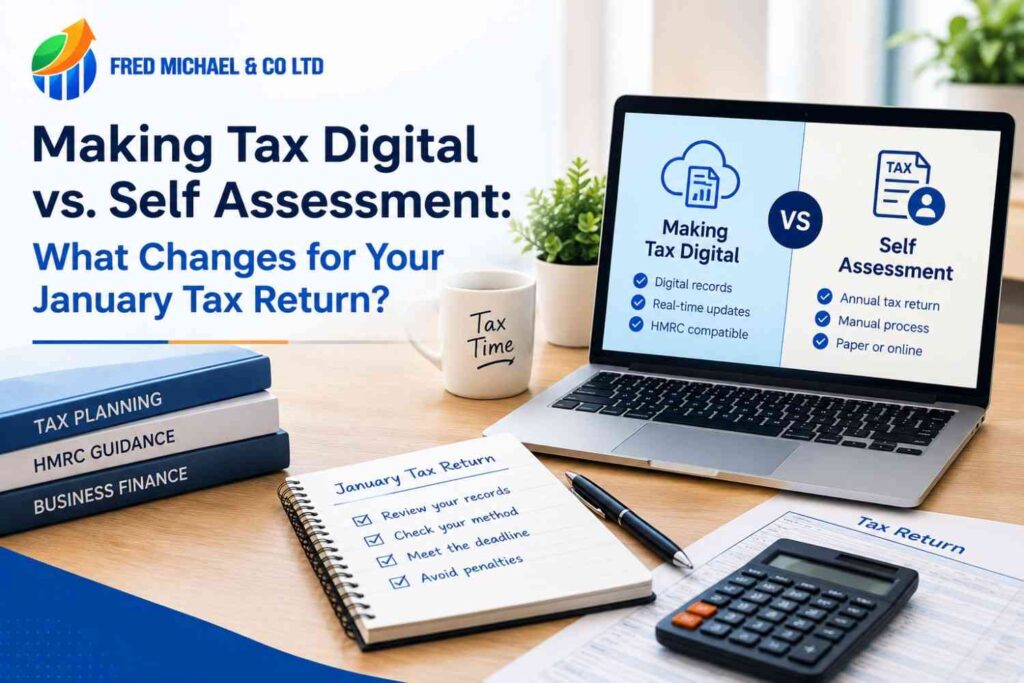
For most sole traders and landlords, 31 January has always meant one thing: the Self Assessment deadline. One return, one set of figures, one payment. Making Tax Digital vs Self Assessment is quickly becoming one of the most searched comparisons in UK tax, and for good reason Making Tax Digital for Income Tax (MTD for ITSA) doesn’t scrap that January date, but it fundamentally changes what leads up to it. Instead of a single annual filing, affected taxpayers now build their tax position gradually across the year through quarterly updates, before a final submission replaces the old Self Assessment form. For those who are not yet affected by MTD, a self assessment tax return service in London can help ensure the annual return is prepared accurately and submitted on time.
This article breaks down exactly what’s changing under Making Tax Digital January tax return rules, what’s staying the same, and what your next filing will actually look like depending on where you sit under the new system.
What is Making Tax Digital?
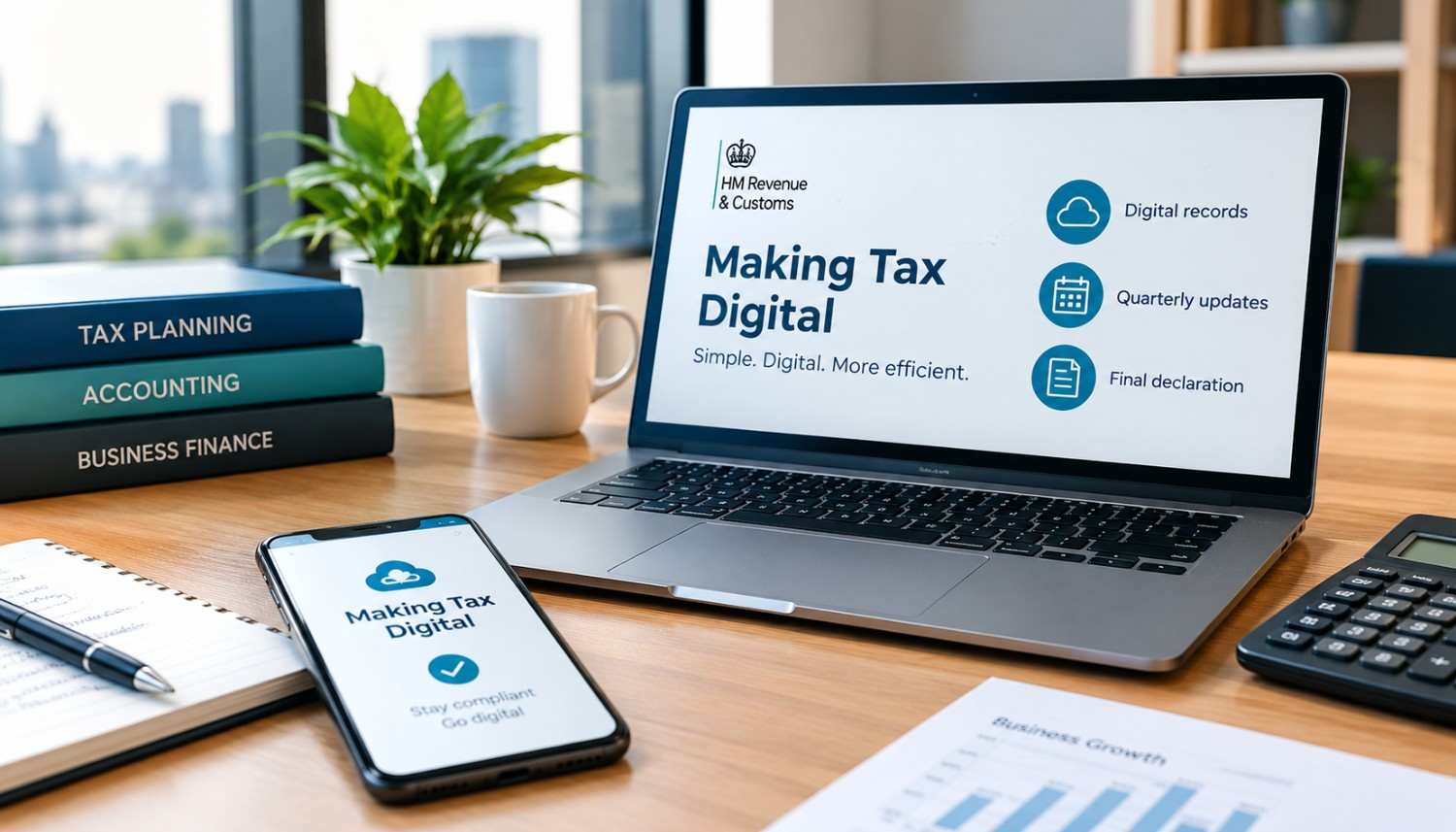
Making Tax Digital (MTD) is HMRC’s programme to modernise how tax is reported in the UK by replacing annual paperwork with continuous digital record keeping. Instead of compiling a year’s worth of figures once, taxpayers within scope log income and expenses digitally throughout the year using HMRC-recognised software, then submit quarterly updates roughly every three months. After the tax year ends, a Final Declaration pulls everything together including non-business income, reliefs, and allowances and this is what actually replaces the old annual return. MTD for Income Tax became mandatory from April 2026 for sole traders and landlords with qualifying income above £50,000, with the threshold dropping to £30,000 in April 2027 and £20,000 in April 2028.
What is Self Assessment?
Self Assessment is the system HMRC has long used to collect Income Tax from people whose earnings aren’t automatically taxed through PAYE. This includes the self-employed, landlords, and anyone with significant untaxed income such as dividends or savings interest. Under Self Assessment, you report all of your income and expenses for the tax year in a single return, submitted either online or on paper, by 31 January following the end of that tax year. Any tax owed is paid by the same date, with a second instalment due by 31 July for many self-employed taxpayers under the payments on account system. It’s a once-a-year process: gather your records, calculate your figures, and file.
Self Assessment vs Making Tax Digital
Feature | Self Assessment | Making Tax Digital (MTD) |
Filing frequency | One return per year | Four quarterly updates + one Final Declaration |
Record keeping | Paper, spreadsheets, or software — no fixed format | Digital records only, via HMRC-recognised software |
Submission method | HMRC online portal or paper forms | Compatible MTD software only |
Who it applies to | Anyone with untaxed income, including self-employment, property, dividends, etc. | Sole traders and landlords above the qualifying income threshold: £50,000 from April 2026, £30,000 from 2027, and £20,000 from 2028 |
Final submission deadline | 31 January following the tax year | 31 January following the tax year, via Final Declaration |
Payment dates | 31 January, plus 31 July payments on account where applicable | Unchanged — 31 January and 31 July |
Quarterly submissions | Nothing — one annual filing only | Summary totals of income and expenses, rather than individual transactions |
Error correction | Amend the return within 12 months | Correct through a later quarterly update or the Final Declaration |
Late filing penalties | Standard late-filing and late-payment penalties | Same penalties, plus a points-based system for missed quarterly updates; a £200 fine applies after four points |
Exemptions | Age, disability, digital exclusion, and other HMRC-recognised cases | Same exemptions, plus additional MTD-specific exemption routes |
Read More: Making Tax Digital in 2026: What the First Quarterly Deadline Revealed And What Comes Next
The Old System: How Self Assessment Currently Works
Under traditional Self Assessment, anyone with untaxed income self-employment earnings, rental income, dividends, and more reports everything once a year. You gather your records, calculate income and allowable expenses, and submit a single return either online or on paper by 31 January following the end of the tax year. Any tax owed is due on the same date, with a second instalment under payments on account 31 July for many self-employed taxpayers.
It’s simple in structure, even if the January rush is stressful for many. The drawback HMRC has long pointed to is accuracy: errors and estimated figures often only surface once a year, when it’s too late to fix them gradually.
What Making Tax Digital Changes
MTD vs Self Assessment doesn’t mean the annual return disappears for everyone only for those who cross specific income thresholds. Where it applies, the annual return is replaced by a different rhythm:
- Continuous digital record keeping income and expenses logged digitally throughout the year using HMRC-recognised software, rather than compiled from memory in January. This shift toward digital record keeping vs paper records is the biggest behavioural change MTD introduces.
- Quarterly digital updates summary totals submitted roughly every three months, rather than one annual submission.
- A Final Declaration submitted after the tax year ends, pulling together the quarterly updates, corrections, non-business income, and claims for reliefs. This delivers the annual tax return replacement taxpayers ask about most.
The quarterly updates are not tax returns, short digital summaries, not individual transactions and no tax is calculated at that point. Some taxpayers also encounter the term end of period statement, an earlier name for finalising each business’s figures before the year-end declaration. The real equivalent to your current Self Assessment form is the Making Tax Digital Final Declaration, submitted after the year ends.
Who Is Affected & Who Isn’t
MTD is being phased in gradually rather than applying to everyone at once:
- From April 2026 — mandatory for sole traders and landlords with qualifying income self-employment property (gross, not profit) above £50,000, based on 2024/25 Self Assessment figures.
- From April 2027 — the threshold drops to £30,000.
- From April 2028 — the threshold drops again to £20,000.
If your combined income sits below these thresholds, nothing changes yet, you’ll continue filing a standard Self Assessment return exactly as before. Partnerships, limited companies, trustees, and non-resident companies also remain outside MTD for now; this is a Self Assessment tax return changes update tied specifically to Income Tax.
Some individuals are exempt even above the threshold. MTD exemptions age disability cases including digital exclusion due to age, disability, religion, or lack of internet access continue to be recognised, alongside existing exemptions and MTD-specific routes taxpayers can apply for through HMRC.
What Happens to Your Very Next January Return
Crossing into MTD in April 2026 doesn’t mean your upcoming January return changes shape immediately. Your 2025/26 return covering the tax year before MTD started still needs filing the traditional way, by 31 January 2027. MTD only affects the tax year it applies from onward, so someone mandated from April 2026 files one last “normal” return in January 2027, before their first MTD year (2026/27) produces a Final Declaration due 31 January 2028 instead.
There’s a transition year where old and new systems briefly overlap, which is exactly why the Self Assessment deadline UK landlords face right now is so widely searched many simply aren’t sure which system applies to their very next filing.
What Stays Exactly the Same
- The deadline: 31 January remains the date your final tax position must be confirmed, whether via Self Assessment or an MTD Final Declaration.
- Payment dates: income tax payments are unaffected. You still pay by 31 January, with payments on account still due 31 July where applicable.
- What you’re taxed on: MTD changes how and when you report income, not the underlying tax rules or reliefs available.
- Declaring all income: your Final Declaration still includes non-business income like savings or PAYE earnings, exactly as your current return does.
For anyone dreading a complete overhaul of the tax calculation itself, this is the reassuring part: MTD changes reporting cadence and method, not tax policy or how much you owe.
The Practical Difference Come January
Under Self Assessment, January is when the work happens gathering a year’s records and submitting everything at once. Under MTD, most of that work is already done by January. Your quarterly digital updates have already logged income and expenses throughout the year, so your Final Declaration becomes a review-and-confirm exercise: check the totals, add non-business income, apply reliefs, and submit.
The volume of work doesn’t disappear, it’s spread across the year rather than concentrated into one stressful sprint. For businesses that struggle with cash flow surprises at year-end, the quarterly rhythm also means tax positions become visible much earlier, giving more time to plan for what’s owed.
Penalties: A New System, Not Just a New Deadline
Self Assessment penalties for late filing and payment continue as before. MTD adds an extra layer: a points-based system for missed quarterly updates. Each late submission earns a penalty point, and reaching four points triggers a £200 fine, with further £200 penalties for each subsequent late submission. HMRC has confirmed no penalty points will be issued for the first year taxpayers are mandated into MTD, giving new joiners a genuine grace period.
Should You Prepare Now, Even If You’re Not Yet Affected?
If your income is trending upward, or you’re a landlord adding a second or third property, watch the thresholds closely, £30,000 arrives April 2027, £20,000 in April 2028. Starting digital record keeping early, before it’s mandatory, makes the eventual transition far smoother. General Making Tax Digital advice UK guidance consistently points to the same conclusion: the earlier you build the habit, the less disruptive the switch-over feels.
Getting Professional Support With the Transition
Given how much is shifting, many sole traders and landlords choose not to navigate this alone. A well-established accounting service in London can manage both quarterly submissions and the eventual Final Declaration, ensuring nothing falls through the cracks during the transition year. Specialist tax return accountants in London are useful for anyone straddling both systems at once, while dedicated tax return services London providers can clarify exactly which properties count toward the qualifying income threshold.
For anyone still below the thresholds, a straightforward self assessment tax return service in London remains the right fit, and a self assessment tax return service in London that also understands MTD can guide clients through the eventual switch before it becomes mandatory. Landlords in particular often benefit from tax return accountants in London who split their time between traditional filings and MTD onboarding, and a dedicated MTD for Income Tax accountant London practice can handle the software setup end-to-end. Similarly, broader tax return services London firms increasingly bundle quarterly bookkeeping with the eventual Final Declaration, so nothing gets missed between the two systems.
Working with experienced business financial advisors in London helps turn MTD’s quarterly visibility into better cash flow planning rather than pure admin. Smaller operations often find that combined accounting services for small business support covering payroll, VAT, and accounting and bookkeeping services alongside MTD is more cost-effective than piecing together separate providers, and any general Self Assessment accountant UK should be able to advise on exactly which system applies to you right now.
Final Thoughts
Making Tax Digital doesn’t eliminate the January tax return, it changes what arrives at your door on that date and how much work goes into getting there. For those still below the thresholds, nothing changes yet: file your Self Assessment return as usual, ideally with support from a trusted accounting service in London if your affairs are complex. For those already mandated, January now marks the point where a year of quarterly updates comes together into a Final Declaration, rather than the starting point for compiling everything from scratch.
The safest approach, regardless of which side of the threshold you sit on, is to treat digital record keeping as good practice rather than a burden imposed by HMRC. With thresholds dropping over the next two years and UK small business tax compliance expectations only getting stricter, most sole traders and landlords will eventually be filing this way regardless and getting ahead of it now, whether independently or with help from a good accounting services for small business, accounting and bookkeeping services provider, or business financial advisors in London, will save considerable stress later. Fred Michael & Co Ltd can help you prepare for Making Tax Digital with practical accounting and bookkeeping support. Get in touch today and make your next MTD deadline easier to manage.