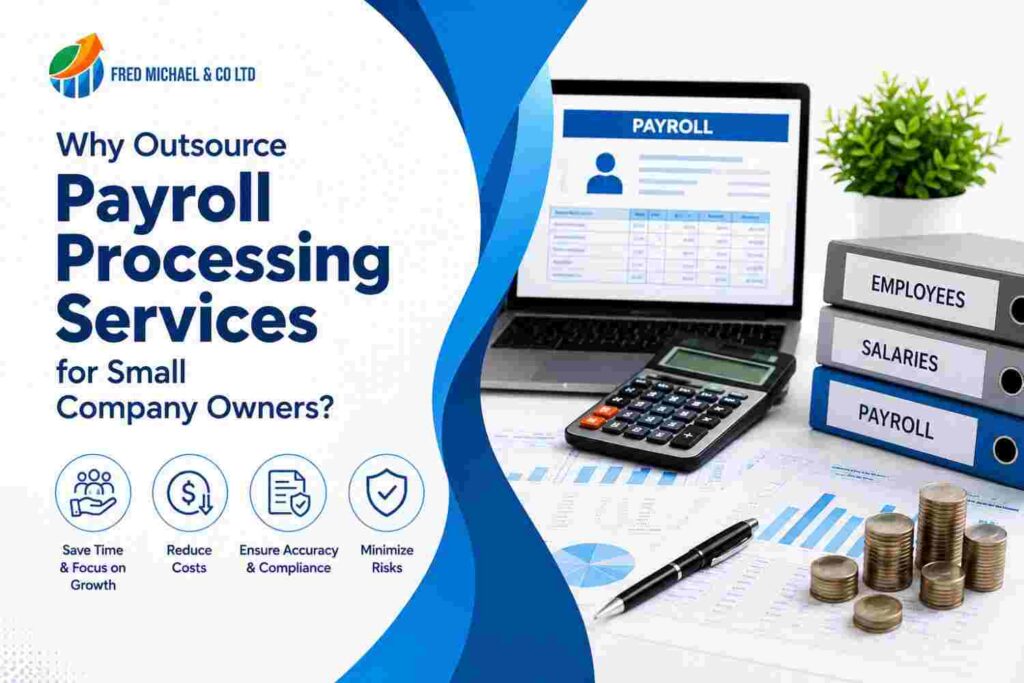
If you are running a business, you already know that paying your employees is one of your most critical responsibilities. However, as a company grows, tracking hours, calculating taxes, and keeping up with government regulations becomes a massive, complicated chore.
To handle this, many businesses choose to outsource payroll. But what exactly does that mean, and how does it work? Let’s break it down in simple terms.
What is Payroll Services?
At its simplest, payroll is the process of calculating and distributing wages to your employees. However, it is much more than just writing a check or sending a direct deposit. A complete payroll cycle involves tracking hours, calculating taxes, withholding the correct deductions, and filing regulatory reports with the government.
For a growing company, managing these moving parts manually can quickly become overwhelming. This is why investing in dedicated payroll services for small business teams is one of the smartest operational decisions you can make. It transforms a time-consuming administrative burden into an automated, error-free system.
Understanding Outsource Payroll
Managing payroll can be one of the most time-consuming responsibilities for a business owner. From calculating wages and deductions to handling tax filings and compliance requirements, payroll administration requires accuracy and attention to detail. As a company grows, these tasks become more complex and can take valuable time away from core business operations.
Outsourcing payroll is an effective solution that allows businesses to streamline payroll processes while reducing administrative burdens. Professional payroll providers ensure employees are paid accurately and on time, helping businesses avoid costly errors and compliance issues. They also stay updated with changing tax regulations and employment laws, minimizing the risk of penalties and legal complications.
Another major benefit of outsourced payroll services is improved efficiency. Business owners no longer need to spend hours processing payroll, managing records, or preparing reports. Instead, they can focus on strategic activities such as customer service, business development, and revenue growth. Outsourcing payroll can also improve data security by ensuring sensitive employee and financial information is handled using secure systems and processes. Additionally

Step-by-Step: How the Outsourcing Payroll Process Works
Transitioning from manual spreadsheets or clunky internal systems to an outsourced payroll provider can feel like a major leap. However, the actual operational workflow is incredibly straightforward.
Once your business completes the initial setup, the ongoing cycle runs like clockwork, requiring minimal effort from your team. Here is exactly how the step-by-step process works, from onboarding to payday.
Implementation & Onboarding (One-Time Setup)
Before the regular payroll cycles can begin, your provider needs to build your company’s digital payroll profile.
1.Data Collection & Migration:
You provide the vendor with your company’s historical payroll records, employee tax identifiers (like PAN in India, SSN in the US, or NI numbers in the UK), current salaries, and bank details.
2.Policy Configuration:
The provider integrates your specific business policies into their system. This includes defining your pay schedules (weekly, bi-weekly, or monthly), overtime rates, holiday calendars, and leave parameters.
3.Compliance Integration:
The vendor links your system with local and national tax portals to handle automatic payroll tax deductions, statutory pension enrollments (like PF/ESI or 401k), and year-end filings.
The Regular Payroll Cycle (Ongoing)
Once onboarding is complete, your active payroll cycle scales down into an easy, four-step routine.
Step 1: Data Submission (Your Part)
Near the end of the pay period, you submit any variable data for that specific cycle to the provider. This is typically done through a secure cloud portal. You will upload:
- Total hours worked (extracted from your time-tracking tools or punch-in software).
- Any approved leaves, sick days, or unpaid absences.
- One-off changes like commissions, performance bonuses, or expense reimbursements.
- Onboarding details for new hires or termination pay for departing employees.
Step 2: Calculation & Compliance Review (The Provider’s Part)
The payroll provider’s engine takes over the heavy lifting. They calculate:
- Gross Pay: Total earnings before any cuts.
- Statutory Deductions: Pre-tax and post-tax deductions, income tax withholdings, and social security.
- Net Pay: The final “take-home” amount for each employee.
The data is then run through a compliance check to ensure accurate calculations according to the latest tax laws.
Step 3: Approval and Distribution (Payday)
The provider generates a payroll summary preview for your final review. Once you hit “Approve”, payments are distributed:
- To Employees: Net salaries are sent automatically via direct deposit to employee bank accounts. Simultaneously, digital payslips are uploaded to secure employee self-service portals.
- To Management: Detailed payroll ledgers and cost reports are updated in your company dashboard for accounting reconciliation.
Step 4: Statutory Filing & Tax Deposits (Post-Payday)
The process doesn’t end on payday. The provider ensures your business remains fully compliant by handling the paperwork:
- They deposit the withheld payroll taxes directly to government tax agencies on your behalf.
- They file regular statutory reports (such as monthly payroll declarations or quarterly tax returns) to protect your business from audit liabilities.
Common Payroll Mistakes Small Businesses Make
Because payroll has so many moving parts, manual mistakes are incredibly common. Knowing what to watch out for can save your business thousands of dollars.
- Running Payroll in Spreadsheets: While Excel is great for basic math, it does not update itself when government tax rates change. A single broken formula can ruin your entire financial record.
- Missing Tax Deadlines: The government expects tax deposits on strict schedules. Missing these dates leads to automatic interest charges and late-payment penalties.
- Poor Record-Keeping: Labor inspectors and financial auditors can ask to see your payroll registers, attendance sheets, and tax receipts at any time. Keeping messy or scattered records leaves your business highly vulnerable during an audit.
Why Do Companies Choose to Outsource?
Managing payroll in-house using basic spreadsheets or entry-level software carries hidden risks. Businesses choose to outsource for a few major reasons:
1. It Saves Massive Amounts of Time
Payroll is highly repetitive and time-consuming. Outsourcing frees up business owners or internal HR managers to focus on revenue-generating tasks, like sales, customer service, and product development.
2. It Eliminates Expensive Compliance Mistakes
Tax laws and labor regulations change constantly. If you make a mathematical error or miss a filing deadline, the government will issue heavy financial penalties. Professional payroll providers have compliance experts who stay on top of these laws, completely shielding your business from costly mistakes.
3. It Offers Better Security and Tech
Payroll data is highly sensitive. Top-tier providers use advanced cloud systems with bank-grade encryption to protect employee data from cyber threats. They also offer Employee Self-Service Portals, allowing workers to log in and download their own payslips or tax forms without bothering management.
Is Outsourcing Right for Your Business?
As a business grows, managing payroll becomes more complicated. While small companies with only a few employees may handle payroll using basic software, things can quickly become challenging when hiring more staff, working with contractors, or expanding to different locations. Outsourcing payroll helps simplify the process by ensuring employees are paid accurately and on time while reducing the risk of costly mistakes.
Professional payroll providers also help businesses stay compliant with tax laws, reporting requirements, and employment regulations. This reduces administrative stress and allows business owners to focus on running and growing their company. Instead of spending valuable time on calculations, tax filings, and paperwork, business owners can concentrate on serving customers and increasing revenue. Overall, outsourcing payroll offers convenience, accuracy, compliance, and peace of mind, making it a smart solution for growing businesses.
Choosing the Right Approach for Your Business
As a small business owner, you have a few different paths you can take to manage this process effectively:
Method | Pros | Cons | Best For |
Manual (Spreadsheets) | Free upfront cost | High error risk, very time-consuming | Solopreneurs with zero employees |
In-House Software | High control, automated math | Requires internal upkeep and knowledge | Growing teams with a dedicated HR person |
Outsourced Providers | Peace of mind, full compliance | Monthly service fees | Busy business owners focused on scaling |
For most growing companies, handling everything in-house becomes too risky over time. Utilizing modern payroll services for small business platforms eliminates manual data entry, guarantees accurate tax calculations, and provides digital self-service portals where employees can download their own payslips.
Furthermore, payroll is deeply tied to your broader business finances. If you find yourself overwhelmed by year-end filings, corporate tax returns, and complex financial reporting, it is often wise to outsource tax preparation services to a qualified specialist. This ensures your annual corporate filings line up perfectly with your monthly payroll records, giving you complete financial clarity and ultimate peace of mind.
Final Thoughts
Payroll doesn’t have to be a source of monthly stress. By setting up a clear operational workflow, classifying your workers properly, and leveraging modern automation tools, you can ensure your team gets paid correctly every single time. Taking control of your payroll today creates a professional, compliant foundation that allows your small business to scale smoothly.
At Fred Michael & Co Ltd, we handle the complexities of compliance, tax calculations, and direct deposits so you can focus entirely on growth. Our tailored solutions eliminate administrative errors, protect you from costly penalties, and guarantee your team is paid accurately and on time, every single month.
Ready to transform your back-office operations and scale with absolute confidence? Contact Fred Michael & Co Ltd today to schedule your free payroll consultation and discover the power of stress-free business management.